Table of Contents
Introduction
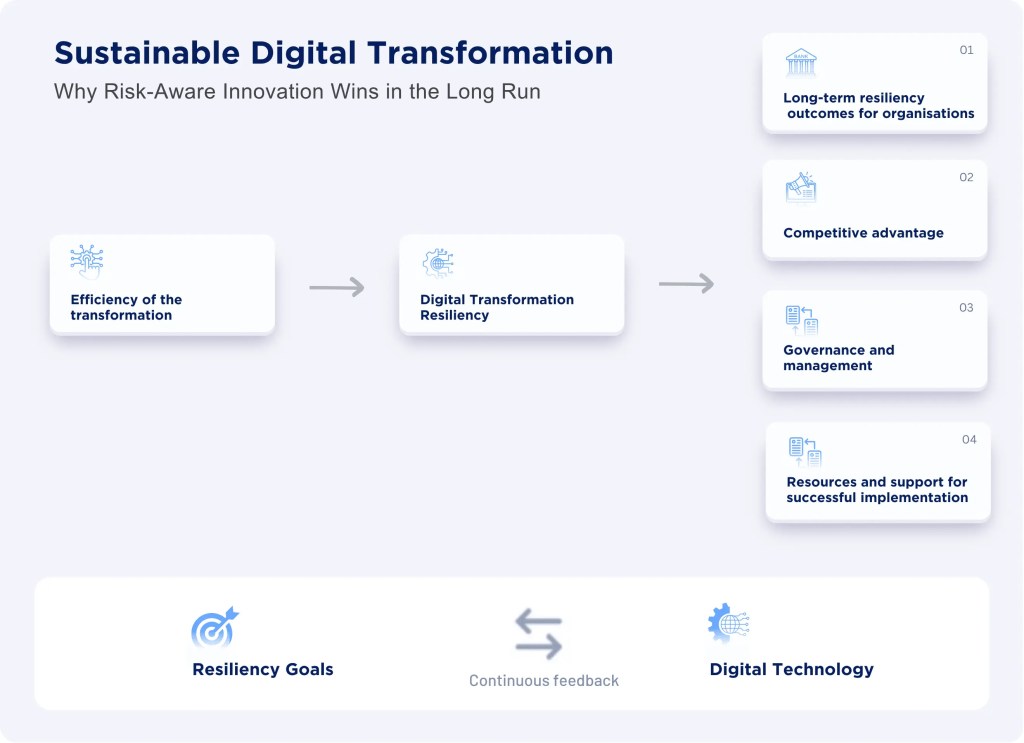
In today’s BFSI landscape, digital transformation is no longer about speed, agility and customer experience, it’s about balancing agility with assurance as part of delivery. Sustainable innovation means being transformative yet putting up adherence to strong governance, risk and compliance management, ensuring that banks and fintechs grow safely for the long term.
Innovation with Guardrails
The financial sector is rapidly evolving from AI-led credit decisions to digital transactions reshaping how banks, NBFCs, insurers operate. But the winners in this race will be those who innovate responsibly. Recent data breaches, compliance failures, and the struggle of some “digital-first” banks have shown that non-compliance & process failures lead to fragility. Growth without governance is no longer acceptable.
Leaders now face a dual mandate: drive cutting-edge transformation while maintaining trust and regulatory compliance. Regulators like the RBI have strengthened digital lending and IT governance norms, while global frameworks NIST, ISO 27001 push institutions to embed risk controls in every technology rollout and management.
The Shift in Mindset
The industry is moving from unbridled innovation to risk-aware innovation, driven by three key shifts:
1. Regulators Recalibrating the Rules:
Financial authorities are more proactive than ever. The RBI’s 2025 Master Directions on digital lending and 2023 IT governance guidelines as well as outsourcing of technology services demand that innovation happen within resilient, compliant systems. Compliance is now built into digital strategy not added later.
2. From Growth-at-All-Costs to Resilience:
The end of easy capital and rising economic uncertainty have pushed investors to value sustainable growth over hyper-scaling. A fintech’s success now depends as much on fraud controls and profitability as on user acquisition.
3. Rising Customer Expectations for Trust:
Customers want speed and safety. A decade ago, flashy apps attracted users while today, one security lapse can destroy loyalty. Trust and reliability have become key differentiators: secure, responsible innovators will outlast trendier but unstable players.
The next phase of digital transformation values stability and trust as much as innovation and convenience. The goal isn’t to slow progress but to make it sustainable.
The Challenge
Balancing innovation and risk isn’t easy. BFSI leaders must innovate fast but safely.
Legacy Systems vs. Agile Tech:
Many established banks run decades-old cores that weren’t built for APIs, AI, or cloud. Integrating new tech with legacy systems introduces vulnerabilities and slows deployments. Yet not modernizing risks outages and security gaps. CIOs must balance stability with agility.
Regulatory Complexity:
Financial products cross multiple regulatory domains: data privacy, AML, customer protection, and capital norms. Rules evolve constantly, making “compliance by design” essential. The challenge is ensuring governance doesn’t stifle creativity.
Cybersecurity and Third-Party Risks:
Every new integration from fintech APIs to cloud services widens the attack surface. Cyber threats are relentless, and a single breach at a vendor can damage reputation instantly. Robust cybersecurity, vendor due diligence, and incident readiness are now core to innovation.
Each challenge underscores why digital transformation must be deliberate and well-governed. Understanding these risks is the first step toward building resilient innovation.
Join Our Newsletter
Get exclusive insights on banking, fintech, regulatory updates and industry trends delivered to your inbox.
Why It Matters
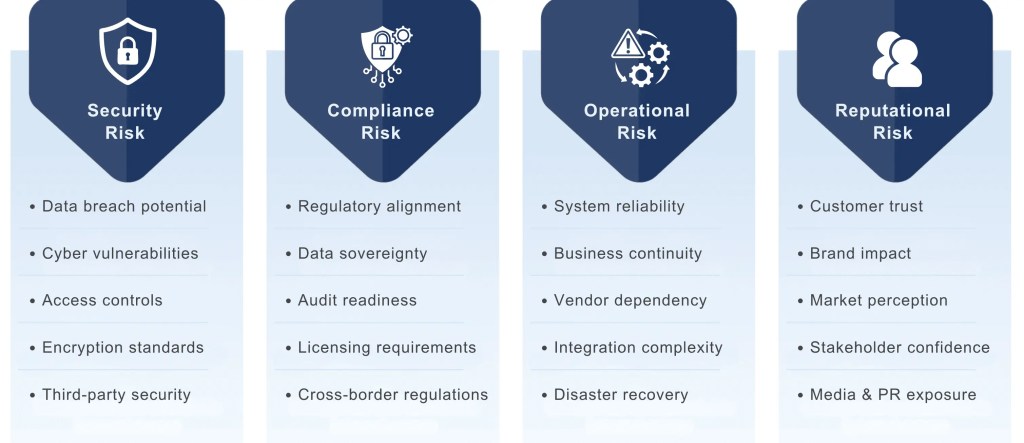
Risk Assessment Framework for BFSI
A comprehensive framework for evaluating digital transformation initiatives in Banking, Financial Services, and Insurance sectors
In financial services, the cost of failure is huge, while the rewards of getting it right are lasting.
Protecting Trust and Reputation:
Banks run on trust. A data breach or failed digital product can undo years of credibility. Conversely, institutions that launch carefully testing rigorously and securing customer data build enduring confidence. In India and abroad, stable, reliable digital platforms consistently outperform flashy but unreliable fintechs.
Meeting Stakeholder Expectations:
Regulators prefer safe rollouts over risky big launches. Customers prioritize security as much as features. Investors demand resilience and compliance discipline. Even employees prefer organizations that innovate responsibly. Risk-aware transformation builds goodwill, attracts capital, and helps retain customers and talent alike.
Ultimately, responsible innovation turns digital transformation into a sustained growth engine not a gamble. The institutions that value governance as much as creativity are the ones that will endure.
The Road Ahead
To make this mindset actionable, BFSI leaders must operationalize risk-aware innovation through a few key steps:
1. Leverage RegTech and Sandboxes:
Regulatory technology can automate compliance: monitoring transactions, scanning code for vulnerabilities, and generating reports in real time. Regulatory sandboxes, such as the RBI’s initiative, let institutions safely test new ideas under supervision.
2. Strengthen Cyber and Third-Party Resilience:
Adopt robust cybersecurity practices: multi-factor authentication, encryption, penetration testing, bug bounties, and AI-driven anomaly detection. Conduct regular vendor audits and have clear contingency plans for outages or breaches.
These measures create a balance between bold experimentation and responsible execution. It’s a long-term discipline, not a one-time fix. The institutions that persist will stand out excelling not just in innovation, but in resilience.

Strategic Takeaway
The digital evolution in the financial sector isn’t about being the quickest or flashy, it’s about being the most enduring, reliable and resilient .
Risk-aware innovation is not a brake on progress but it is the foundation that makes progress last.
By embedding risk management into every layer of digital transformation, banks and fintechs can build confidently, scale sustainably, and earn lasting trust. The true leaders of tomorrow won’t be those who moved first but those who moved wisely: blending agility with assurance, and innovation with integrity.