Table of Contents
A Strategic Imperative for the Digital Age
The financial services industry stands at a critical inflection point. While digital transformation has unlocked unprecedented opportunities for growth and customer engagement, it has simultaneously exposed institutions to an evolving threat landscape that traditional security models cannot adequately address. The question is no longer whether a cyber incident will occur, but how well-prepared institutions are to withstand, respond to, and emerge stronger from such challenges.
The Perfect Storm: Why BFSI Faces Unprecedented Risk
Financial institutions operate in a uniquely vulnerable position, characterized by three converging factors that create a perfect storm of cyber risk:
- High-Stakes Target Profile: Banks hold the dual attraction of valuable financial assets and sensitive personal data, making them prime targets for both financially motivated criminals and nation-state actors seeking to disrupt economic stability.
- Complex Interconnectivity: Modern financial services depend on intricate ecosystems of fintech partnership, third-party vendors, cloud services including adoption of SAAS platforms, and ecosystem interfaces. Each connection point represents both an operational necessity and a potential vulnerability, multiplying the attack surface exponentially.
- Accelerated Digital Adoption: The pandemic-driven shift to digital channels outpaced security implementations, creating gaps that threat actors are increasingly exploiting. Application-layer DDoS attacks against the financial sector increased 23% between 2023 and 2024, directly correlating with expanded API adoption across financial services.
For India’s BFSI sector, these challenges are amplified by rapid digitalisation across diverse technological landscapes and varying cybersecurity maturity levels.
Regulatory Evolution: From Compliance to Strategic Advantage
The regulatory landscape has shifted from checkbox compliance to a competitive differentiator. Key developments are reshaping cyber and data resilience strategies:
- RBI Cybersecurity Framework (2016): Risk-based, multi-domain guidelines on governance, incident readiness, and third-party oversight.
- Recent Enhancements:
- Cyber resilience guidelines for Payment System Operators
- Mandatory real-time monitoring and threat intelligence
- Stronger cloud security and data localization rules
- Shorter incident reporting timelines
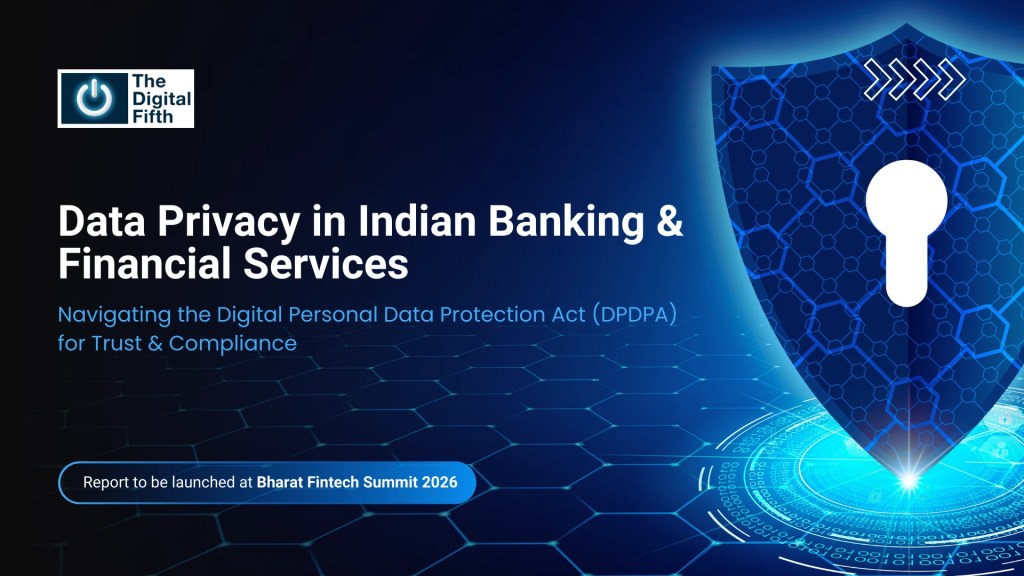
- DPDPA 2023: Explicit consent requirements, breach notifications, and cross-border data transfer controls, transforming customer data handling.
- Digital Payment Security: End-to-end encryption, segregated payment networks, multi-factor authentication for high-value transactions, and real-time fraud detection.
- Operational Risk Management: Comprehensive business impact assessments, measurable recovery objectives, regular operational tests, and cross-training for continuity during disruptions.
The convergence of these frameworks challenges institutions but also creates opportunities—those treating compliance as a baseline, not a ceiling, gain in trust, efficiency, and market position.
Join Our Newsletter
Get exclusive insights on banking, fintech, regulatory updates and industry trends delivered to your inbox.
Patterns of High-Performance Journeys
Leaders distinguish themselves by embracing:
- Real-Time Journey Analytics: Complete transparency into every user touchpoint uncovers friction and informs rapid optimizations.
- Dynamic Orchestration, Not Static Flows: Adaptive workflows respond intelligently in real time to user context and behavior, replacing rigid form flows.
- Mobile-First Experience Hubs: Mobile apps serve as unified platforms for onboarding, engagement, servicing, and growth.
- AI-Powered Personalization: Behavioral data and predictive algorithms deliver contextually relevant actions and offers at every interaction.
Beyond Traditional Cybersecurity: The Resilience Imperative
Cyber resilience transcends conventional security approaches by focusing on organizational adaptation rather than just protection. While cybersecurity aims to prevent incidents, cyber resilience assumes breaches will occur and builds capabilities to maintain critical operations throughout the incident lifecycle.
This paradigm shift involves four integrated capabilities:
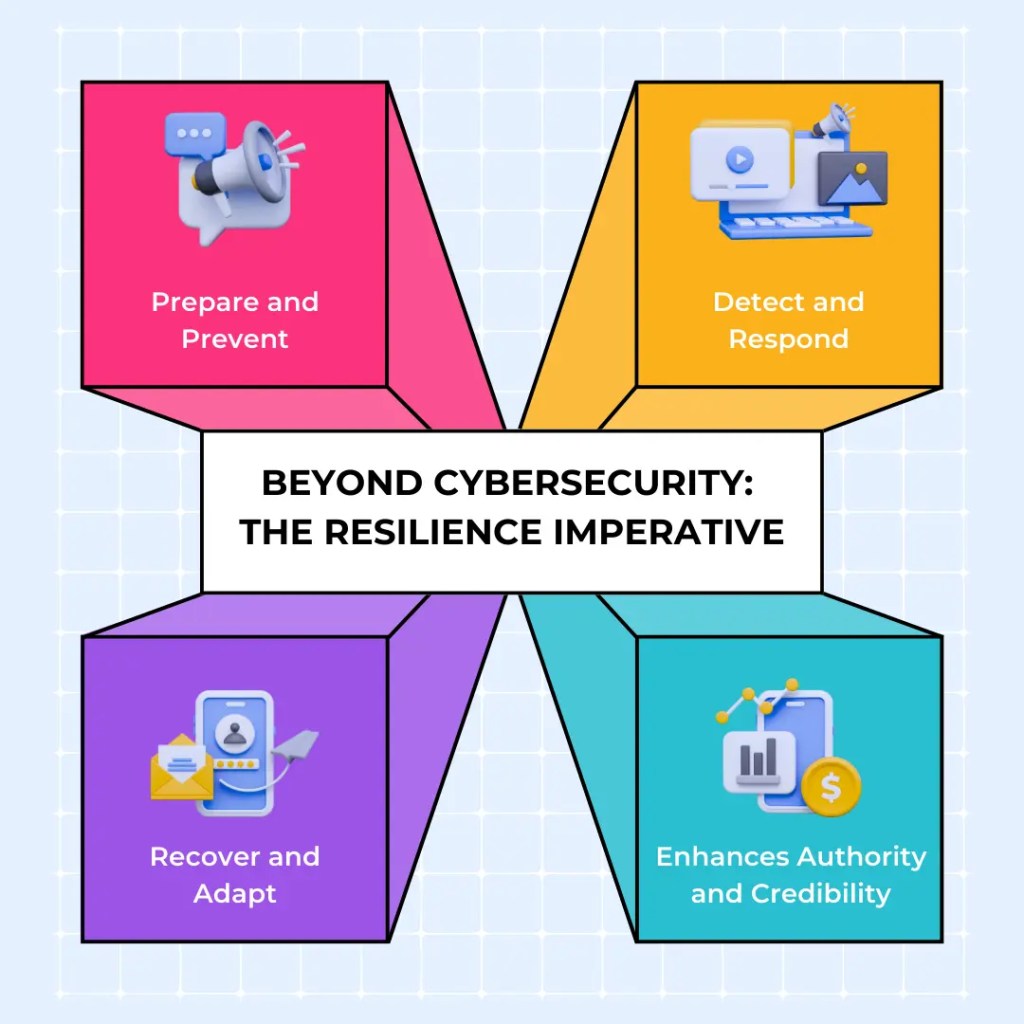
- Prepare and Prevent: Comprehensive risk assessments, multi-layered architectures, continuous employee education, and threat intelligence integration that anticipates rather than merely reacts to threats.
- Detect and Response: AI-powered monitoring systems, automated threat detection, 24/7 Security Operations Centers, and rehearsed response procedures that minimize disruption through rapid identification and containment.
- Recover and Adapt: Business continuity planning, tested backup systems, alternative operational procedures, and clear communication strategies that ensure critical services remain available even during significant incidents.
- Enhance Authority and Credibility: Post-incident analysis, updated security controls, industry threat intelligence sharing, and improved awareness training that transforms each challenge into organisational learning.
Data as the New Battleground
In today’s financial services landscape, data protection extends beyond regulatory compliance to become a strategic business capability. Customer information, transaction records, regulatory data, and proprietary algorithms represent the foundation of competitive advantage and the primary target of sophisticated attacks.
The intersection of RBI cybersecurity guidelines and DPDPA creates a complex but ultimately beneficial compliance landscape requiring integrated approaches across governance, technical implementation, and incident management. Forward-thinking institutions are discovering that robust data protection capabilities enhance both security posture and customer trust, creating sustainable competitive differentiation.
Five Strategic Imperatives for Cyber Resilience
1. Embrace Zero Trust Architecture
The traditional perimeter-based security model is no longer sufficient for modern financial institutions. A Zero Trust approach assumes that no user, device, or application should be trusted by default, regardless of their location or network connection.
Best Practices:
- Implement micro-segmentation to limit lateral movement in case of breaches
- Deploy continuous authentication and authorization mechanisms
- Establish comprehensive monitoring and logging across all access points
- Integrate threat intelligence into access control decisions
2. Deploy Intelligent Threat Detection
Financial institutions must move beyond reactive security measures to implement proactive threat hunting and real-time response capabilities.
Best Practices:
- Deploy advanced Security Information and Event Management (SIEM) systems with machine learning capabilities
- Establish dedicated Security Operations Centers (SOCs) with 24/7 monitoring
- Implement automated response capabilities for common threat scenarios
- Develop threat intelligence sharing mechanisms with industry peers and government agencies
3. Implement Comprehensive Data Protection
With the increasing focus on data protection regulations and customer privacy concerns, financial institutions must implement comprehensive data protection strategies.
Best Practices:
- Implement data classification and handling policies based on sensitivity and regulatory requirements
- Deploy advanced encryption for data at rest, in transit, and in use
- Establish data loss prevention (DLP) systems to monitor and control data movement
- Implement privacy-by-design principles in all new systems and processes
4. Strengthen Ecosystem Security
Given the interconnected nature of financial services, financial institutions encompassing Banks, NBFCs, Insurance, Wealth companies must extend their cybersecurity posture to include third-party vendors and partners.
Best Practices:
- Conduct comprehensive security assessments of all vendors and service providers
- Implement continuous monitoring of third-party security postures
- Establish clear security requirements in vendor contracts and service level agreements
- Develop incident response procedures that include third-party coordination
5. Cultivate a Security-Aware Culture
Human factors remain one of the weakest links in cybersecurity defences. Financial institutions must invest in comprehensive awareness programs that go beyond basic training.
Best Practices:
- Conduct regular phishing simulations and security awareness training
- Implement role-based security training for different job functions
- Establish clear policies and procedures for security incident reporting
- Create a culture of security awareness that encourages proactive threat reporting
Building Organisational Resilience
Cyber resilience ultimately depends on organizational culture and leadership commitment. Board-level accountability, dedicated CISO roles with executive access, regular cybersecurity education for leadership, and clear performance metrics create the foundation for sustained security excellence.
Employee engagement amplifies these efforts through gamified training programs, recognition for security best practices, psychological safety for reporting concerns, and regular communication about evolving threats and organisational posture.
Continuous improvement ensures resilience remains dynamic through regular assessments, lessons learned processes, industry collaboration, and policy updates that keep pace with emerging threats.
The Strategic Imperative: Resilience as Competitive Advantage
The institutions that will thrive in the digital economy are those that recognize cyber and data resilience not as a cost center, but as a strategic capability that enables innovation, builds customer trust, and creates sustainable competitive advantage. The convergence of regulatory requirements, technological advancement, and evolving threat landscapes demands an integrated approach that goes beyond compliance to embrace resilience as a core business competency.
Success in this environment requires three critical shifts:
- From Reactive to Adaptive: Moving beyond incident response to building organizational capabilities that anticipate, absorb, and adapt to disruption while maintaining critical operations and customer trust.
- From Compliance to Competitive Advantage: Transforming regulatory requirements from constraints into capabilities that differentiate institutions in markets where trust and reliability drive customer loyalty.
- From Technology to Transformation: Recognising that cyber resilience ultimately depends on organisational culture, leadership commitment, and strategic vision that views security as an enabler of business objectives rather than a barrier to innovation.
The financial institutions that master these transitions will not only survive the current threat landscape but will be positioned to leverage their security capabilities as platforms for growth, innovation, and market leadership in an increasingly digital world.
The path forward requires specialized expertise that understands both the technical complexities of modern cybersecurity and the strategic imperatives of financial services. This is where Digital Fifth can help transform your institution’s approach to cyber and data resilience, combining deep BFSI regulatory knowledge with cutting-edge cybersecurity expertise to build adaptive security postures that provide competitive advantage while ensuring compliance and customer trust.