Navigating Risk & Compliance in the Digital Era
India’s financial services sector has undergone a profound transformation, evolving from a traditionally low-tech environment to a leader in financial technology and digitization. This shift, accelerated by the COVID-19 pandemic, has seen most financial institutions complete at least one phase of digital transformation, propelling digital operations across industries.
The emergence of agile FinTech companies marks a critical turning point, introducing customer-centric financial solutions that leverage digital technologies to enhance service delivery and set new industry standards.
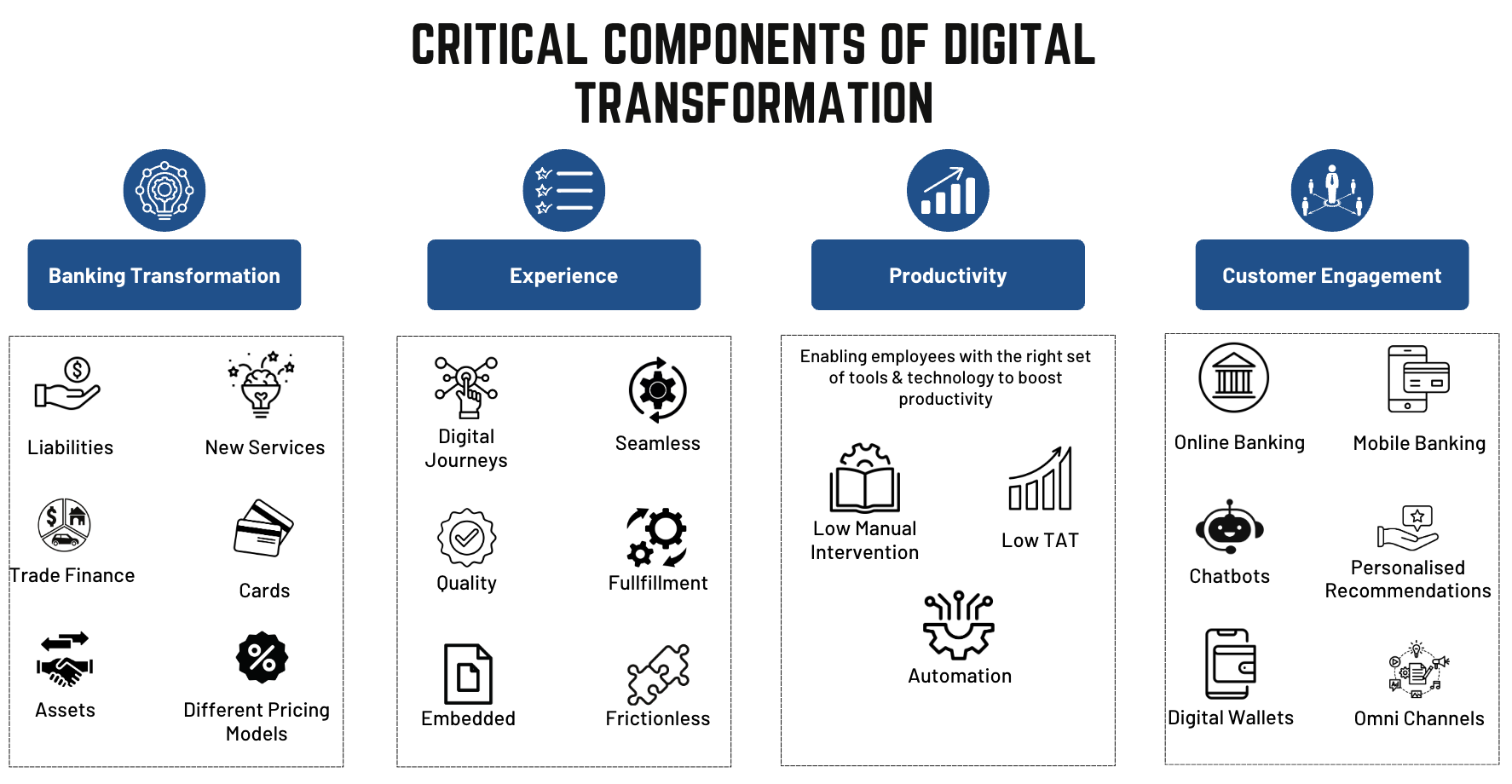
However, this rapid digitization presents significant challenges, particularly in compliance and data security. Despite the benefits, there remains a substantial gap in customer understanding of how their data is managed and shared, highlighting the need for stringent regulatory measures to protect consumer data. The Reserve Bank of India (RBI) has actively refined regulations to safeguard digital financial processes and ensure clarity in compliance.
Changing Digital Dynamic
As the sector evolves, aligning risk management with digital transformation becomes crucial. This evolution prompts a reassessment of traditional compliance methods and the adoption of innovative strategies to address the complexities of digitalization. Financial institutions, including banks and non-banking financial companies (NBFCs), are enhancing their digital capabilities and undergoing extensive transformations, from product redesigns to backend automation. These efforts are vital as digital strategies become central to their business models, increasing the need for rigorous risk management frameworks amid heightened regulatory scrutiny and the collaboration between traditional banks and FinTech firms. This digital integration is not just a trend but a fundamental shift in delivering and managing financial services, underscoring the balance between innovation and the need to protect consumer interests and maintain financial stability.
This transformative shift is not just about adopting new technologies but about fundamentally changing how financial services are conceived, delivered, and managed. The heart of this transformation lies in enhanced connectivity, the integration of complex systems, and the acceleration of product development cycles, each bringing its own set of regulatory and compliance challenges.
Enhanced Connectivity and its Implications
The digital transformation journey of financial institutions has significantly improved connectivity and interoperability among various systems, services, and partners. This new level of integration is primarily facilitated by:
- APIs (Application Programming Interfaces): APIs have become the backbone of digital financial services, allowing for seamless communication between different software applications, enhancing service delivery, and enabling innovative banking solutions.
- Cloud Services: The adoption of cloud computing has revolutionized data storage and processing for FIs, offering scalability, efficiency, and the capability to handle vast amounts of data securely.
- Real-Time Data Processing: The ability to process and analyze data in real time has become a critical component of digital financial services, enabling instant decision-making and offering a more responsive customer experience.
This intricate web of connectivity fosters a dynamic ecosystem but also introduces complexity, especially concerning data security, privacy, and regulatory compliance.
Navigating the Speed of Technological Changes
Rapid technological advancements and continuous product iterations characterize the digital era. Financial institutions are increasingly adopting agile methodologies and continuous integration/continuous deployment (CI/CD) practices to stay competitive and responsive to customer needs. Key aspects of this evolution include:
Agile Interfaces: The shift towards agile development methodologies allows FIs to be more adaptable and responsive to market demands. However, this flexibility often comes with the challenge of ensuring that each product iteration remains compliant with regulatory standards.
CI/CD: Continuous Integration and Continuous Deployment practices enable FIs to release updates more frequently. While this accelerates product development and improves service delivery, it also complicates the task of maintaining regulatory compliance amidst constant changes.
Evolving Digital Journeys: As digital journeys evolve to become more user-centric and personalised, they introduce new variables into the compliance equation, from data handling practices to user authentication and beyond.
Addressing Regulatory and Compliance Risks
In today’s rapidly evolving digital landscape, financial institutions must adopt a proactive and dynamic approach to managing regulatory and compliance risks. As they strive to keep up with technological advancements and dynamic changes in products, they also need to anticipate and adapt to customer needs and an ever-changing regulatory environment. This demands a strategic alignment between technology and compliance goals to ensure that innovations bolster, rather than undermine, regulatory compliance and data security.
As FIs must comply with a vast array of regulations, and data/security standards, which necessitate frequent compliance checks/audits, robust security measures, and regular audits to ensure adherence, there will always be challenges arising as either the teams are working in Silos or not much emphasis is being given upon the compliance vertical, but is today’s scenario noncompliance is not an option left anymore.
Compliance challenges in financial institutions
Multifaceted Checks: Compliance checks are intricate, involving various aspects such as regulations, security, and standards
Complexity: The compliance checks are complex, involving multiple departments
Data/Security Standards: Compliance includes maintaining robust data security measures to protect sensitive information
Time-consuming: Compliance checks are time-intensive, requiring thorough assessment and verification
Periodic Nature: Checks are conducted periodically to ensure ongoing adherence to regulations and standards
Parallel Tracks: Multiple checks outcomes may result from various compliance checks, each tracked separately
To effectively navigate these challenges, financial institutions may need to invest in sophisticated compliance and risk management technologies, such as artificial intelligence and machine learning, to enable real-time monitoring and analysis. Additionally, cultivating a culture that values both compliance and innovation, and breaks down traditional organizational silos, is crucial. This approach ensures that regulatory considerations are embedded from the beginning in the development and deployment of digital services.
Regulatory and Compliance Risks Explored
- Data Protection and Privacy: Financial institutions must strictly adhere to global data protection regulations like GDPR to safeguard sensitive information and ensure robust data governance.
- Cyber Security Threats: Financial systems face advanced cyber threats, necessitating comprehensive security measures and strict compliance with regulatory reporting requirements.
- Third-Party Management: The reliance on third-party vendors introduces risk, requiring stringent due diligence and continuous risk monitoring to ensure compliance with regulatory standards.
- Operational and Business Risks: Digital advancements increase the risks of system outages and service disruptions, emphasizing the need for effective internal processes and remote workforce management.
- AI and Automation Risks: As financial institutions adopt AI, they must address risks related to ethical concerns, algorithmic bias, and automation errors, ensuring responsible use through regulatory compliance.
Consequences of Non-Compliance
The ramifications of failing to address regulatory and compliance risks can be severe, impacting institutions on multiple fronts:
Legal and Financial Penalties: Regulators impose significant fines for non-compliance, with the financial impact often surpassing the initial penalties due to the extensive costs involved in rectifying the issues.
Reputation Risk: Compliance failures can lead to severe loss of customer trust and lasting brand damage, which are crucial in a trust-dependent industry and often more detrimental than direct financial losses.
Operational Disruptions: Non-compliance can cause immediate disruptions in services, such as outages or loss of system access, necessitating substantial revisions to processes and systems to meet regulatory standards.
Possible End of Business: Severe non-compliance can jeopardize a business’s survival, combining legal repercussions, eroded customer trust, and the overwhelming task of compliance rectification, potentially rendering continued operations unsustainable.
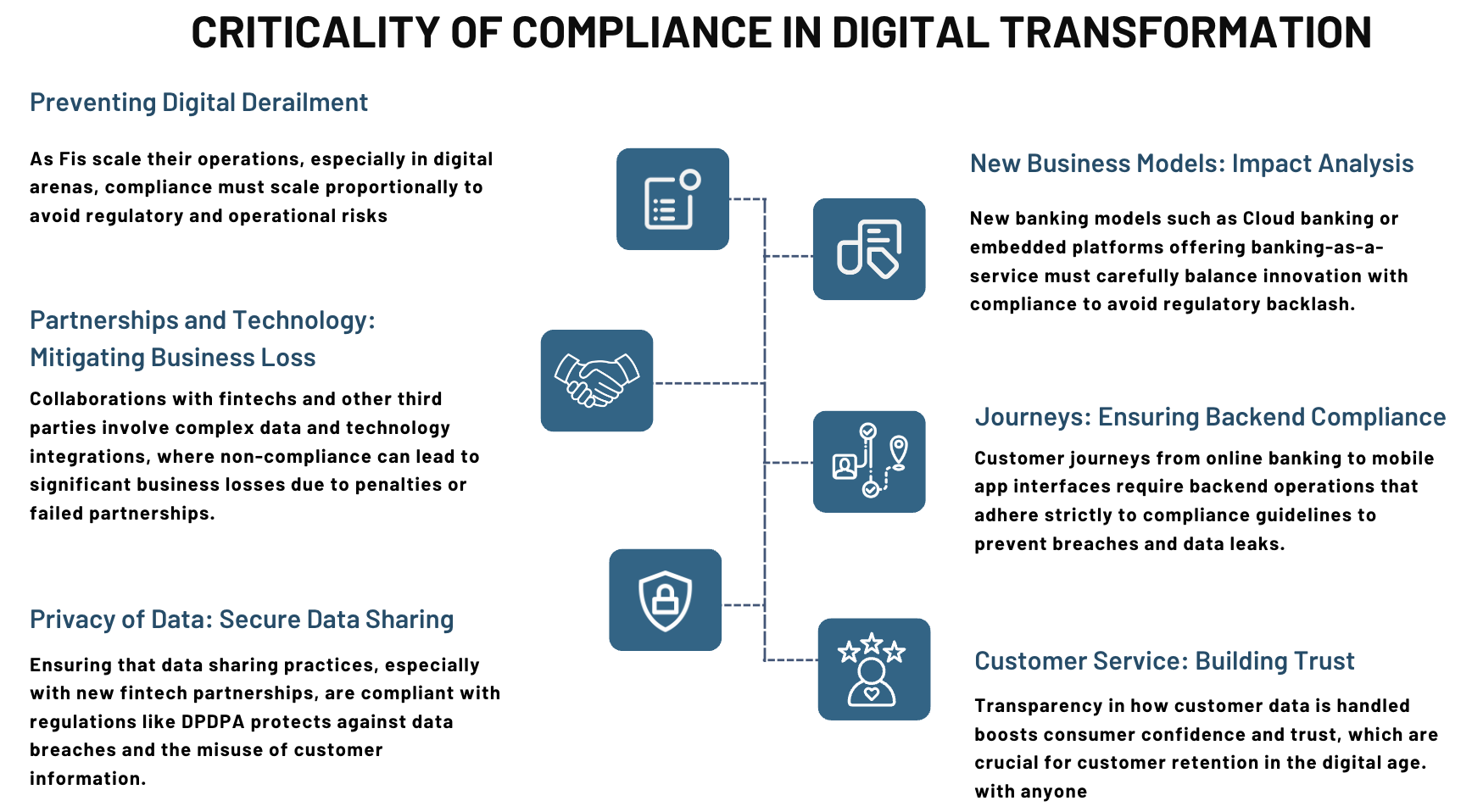
Strengthening Compliance Frameworks in the Digital Era
In this Digital era of Financial Products, compliance cannot be an afterthought. The increasing digitization demands robust frameworks that not only meets current regulations but also anticipate future challenges. Here are some effective Strategies and Approach that can help fortify compliance across industries.
1. Compliance First Approach
- Foundational Strategy: Prioritize regulatory adherence at every stage of business operations to prevent compliance from becoming a reactive measure.
- Integrated Controls: Embed compliance within the systems and operational processes to ensure consistency and reliability.
- Regular Audits: Conduct continuous digitised, automated checks to address compliance issues promptly, maintaining an ongoing dialogue with regulators to adapt to legislative changes.
2. Incorporating Compliance in Product and Customer Journey
- Lifecycle Compliance: Ensure each phase of the product lifecycle meets regulatory standards through embedded compliance checkpoints.
- Dedicated Compliance Check: Ensuring that compliance checks are a part of the release plan to ensure compliance
- Real-Time Monitoring: Implement systems for real-time compliance monitoring throughout the product operations to maintain transparency and accountability.
3. Compliance Model
Streamlined Management: Consolidate multiple control frameworks into a single, unified system that allows for more efficient and effective compliance assessments against diverse standards and policies.
- Compliance Standards & Protocols: Ensure the framework addresses industry best practices and regulatory requirements, minimizing the risk of non-compliance.
4. Holistic Risk Management Framework
- Continuous Monitoring: Engage in constant risk assessment to identify potential threats in real-time, including cybersecurity breaches and compliance lapses.
- Risk Assessment and Mitigation: Regularly evaluate and mitigate risks using quantitative methods and qualitative insights, implementing secure information architectures and robust compliance protocols.
The integration of these strategic elements forms a comprehensive approach to managing compliance and risks in the digital era. By adopting these Effective Strategies and Approach, financial institutions can not only safeguard against current compliance challenges but also prepare for the complexities of future regulations.
Conclusion
As we continue to navigate the complexities of the digital era, the importance of robust compliance frameworks cannot be overstated. To effectively address the myriad challenges posed by digital transformation in financial services, institutions should consider advanced solutions. Implementing robust compliance measures in areas such as Third-Party Risk, IT Governance & Risk, IT Outsourcing, and adherence to esteemed standards like ISO 27000, will significantly strengthen your organization’s defenses against the dynamic risks of today’s digital landscape.
Our specialized offerings ensure that your enterprise not only meets the stringent demands of regulatory compliance and data protection but is also prepared for forthcoming challenges. This proactive approach not only safeguards your operations but positions your business as a leader in securely and responsibly managing financial services in a digitally interconnected world. Partner with us to ensure that your compliance frameworks are as forward-thinking as your business innovations, turning compliance into a strategic advantage.