Table of Contents
Introduction
Banks, Platforms, and the Battle for Relevance
Beyond Transaction Processing
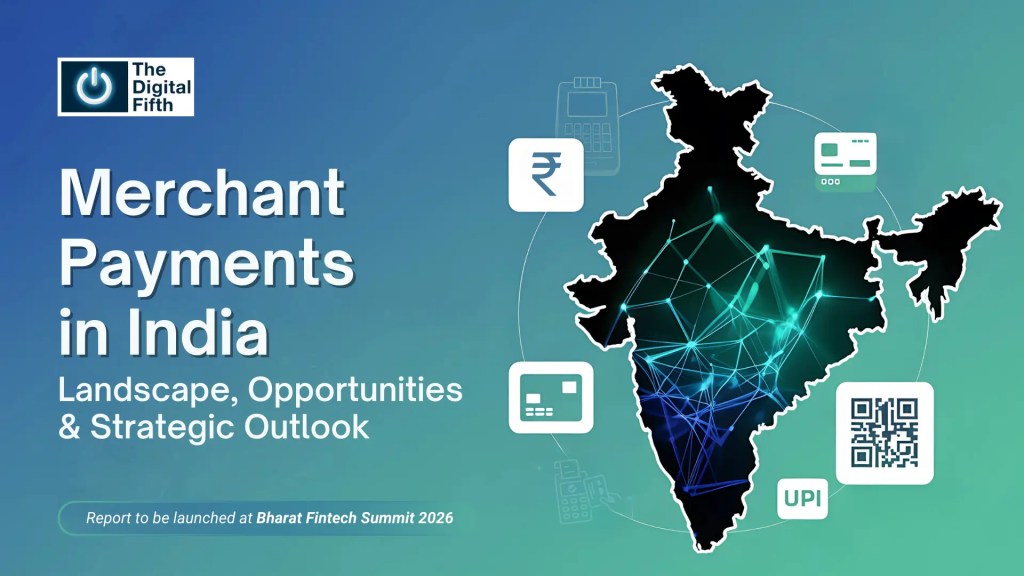
Merchant payments in India are often discussed using metrics like digital adoption and transaction volumes. While these numbers show scale, they hide a deeper structural shift: long-term value is moving away from basic transaction processing toward settlement infrastructure, regulatory oversight, and stronger merchant relationships.
This isn’t a small or gradual change. It’s a reshaping of where competitive advantage sits across the payments value chain.
India’s Post-UPI Inflection Point
India’s real-time, account-to-account system led by UPI has fundamentally changed the economics of merchant acquiring. Payments are now everywhere, happen instantly, and cost almost nothing to process.
As a result, the traditional acquiring model – built around card networks, POS terminals, and interchange revenue – is no longer enough. Payments are becoming part of larger commerce workflows, blurring the lines between acceptance, engagement, and value-added services.
The real question is no longer whether disruption is happening, but how institutions choose to position themselves in this new ecosystem.
A Reconstituted Ecosystem
The merchant payments ecosystem now operates as an interconnected network:
- Banks provide final settlement, balance-sheet strength, and regulatory responsibility.
- Payment aggregators and PSPs handle merchant onboarding, transaction flow, and operational scale.
- Consumer and merchant platforms influence behavior, control distribution, and shape the user experience.
- Infrastructure providers support routing, compliance, reconciliation, and fraud management

No single entity controls the entire stack. Influence derives from strategic positioning within a tightly coupled, interdependent system.
Join Our Newsletter
Get exclusive insights on banking, fintech, regulatory updates and industry trends delivered to your inbox.
The Migration of Power
As transaction costs fall and real-time payment rails become standardized, traditional revenue pools are shrinking. Competitive advantage is shifting to players that:
- Control merchant relationships and distribution
- Own critical infrastructure that ensures reliability, compliance, and trust
Banks still sit at the center as regulated settlement institutions. But platforms increasingly shape how merchants engage with payments, and infrastructure providers determine how resilient and reliable the system is.
This creates a healthy tension around who owns the customer relationship, who captures the economics, and who remains relevant over the long term.
Banking’s Evolving Role
Banks remain central to the ecosystem. Final settlement, system stability, and regulatory oversight cannot be easily replaced.
But their role is changing, from owning the full stack to coordinating within a broader ecosystem. Forward-looking banks are positioning themselves as regulated settlement and balance-sheet partners within larger networks.
Their long-term relevance will depend less on controlling transactions and more on how well they integrate with others and manage risk.
Infrastructure as Strategic Battleground
Infrastructure has moved from being a back-end utility to a true competitive differentiator. Compliance management, fraud detection, smart routing, and real-time reconciliation now directly affect merchant trust and the ability to scale.
As payments become more embedded and invisible, failures in infrastructure can have system-wide consequences. Infrastructure is no longer just a cost center, it’s a competitive advantage.
Platform Influence and Structural Dependency
Platforms embedding payments into commerce, logistics, and software workflows increasingly influence merchant behavior and consumer choice. Distribution power is a significant advantage.
Yet this influence coexists with structural dependency. Platforms rely on banks for regulated settlement and on infrastructure providers for compliance and risk controls. Understanding this balance between autonomy and interdependence is critical to assessing platform-led models.
Operating Model Trade-Offs
Multiple models now coexist:
- Bank-led acquiring – regulatory strength and settlement authority
- Platform-led acceptance – distribution reach and merchant engagement
- Infrastructure-led orchestration – reliability and compliance focus
- Hybrid partnerships – cross-layer collaboration
Every choice involves trade-offs in control, economics, scale, and regulatory risk. Sustainable advantage comes from matching ambition with structural strengths.
From Transaction to Orchestration
Merchant acquiring is shifting from pure transaction processing to ecosystem coordination. The acquirer of the future may not own every layer, but will know how to work across them effectively.
India’s merchant payments ecosystem is entering a phase defined less by rapid expansion and more by structural choices. The players that endure will be those with clarity about their role, resilience in their model, and alignment with the long-term direction of the ecosystem.
Rethinking acquiring is not about small improvements. It’s about understanding how payments, infrastructure, and platforms are coming together to create lasting value in a changed landscape.