
Loans Against Securities are evolving from a niche wealth product into embedded credit infrastructure for...
Read MoreDecoding Technology Due Diligence in Indian Fintech
For long financial providers missed offering customised products to their customers. Products were standardized for all TGs. Accessibility was more branch-led. Modern technology (read digital) changed this to a greater extent. This was a paradigm shift and unlocked great market potential from remote corners of the country as well, adding newer TG & personas to their customer base.
Fintechs have further revolutionized digital adoption by experimenting with diverse technologies, business models & customer personas to help the ecosystem understand what works best in the Indian context. With enhanced focus on efficiency and cost-effectiveness, the fintechs have played a pivotal role in helping the adoption of the new age financial services to suite the every day needs of diverse set of customers with different levels of financial literacy. This led to a large scale BFSI digital transformation, which in turn, opened the door to financial inclusion for millions of previously unbanked individuals.
The Budding Synergy: New Business Models and the Rise of TDD
Today, the Indian Digital ecosystem is a vibrant landscape offering great scope for collaboration. Budding segments like insurtech and wealthtech are creating exciting synergies, offering a more holistic financial experience to consumers. Innovative business models like Banking-as-a-Service (BaaS) and Platform-as-a-Service (PaaS) are enabling established institutions to leverage cutting-edge technology without heavy upfront investments.
However, with this rapid innovation comes the need for a robust technology evaluation process. This is where Technology Due Diligence (TDD) emerges as a critical strategic filter. TDD allows organizations, both established financial institutions and aspiring fintech startups, to conduct a comprehensive assessment of their technology infrastructure. From an investor’s standpoint, TDD has become an indispensable tool for assessing the potential of a fintech for investments. The appetite of the investors has seen exponential growth from $363 million in 2018 to approximately $576 million in 2023. Technology Due Diligence is playing a great role in this investment surge where investors are laying great focus on due diligence before valuations. Technology Due Diligence is crucial not just for investors but also for BFSI companies looking for greater collaboration with Fintech. So let’s try to understand what technology due diligence is in detail.
Demystifying Tech Due Diligence: Your Guide to a Strong Technological Foundation
Tech Due Diligence (TDD) acts as your compass, guiding you towards sustainable growth while revealing potential pitfalls. It’s a systematic evaluation that dissects an organization’s technological infrastructure, uncovering its strengths, vulnerabilities, and future potential. TDD analyzes the tools used to develop products, platform capabilities and features, integration abilities, cybersecurity framework, data collection practices, and utilization for customer analysis.
TDD is crucial before major business decisions such as business expansions, changes in strategic direction, mergers, acquisitions, or investment rounds. This comprehensive assessment examines every aspect of the company’s tech stack, from the quality of software and security protocols to the skills of the tech team and adherence to regulations. Essentially, it equips stakeholders with a clear picture of the risks and rewards associated with a company’s technological foundation.
Unpacking the Technology Pillars in a Fintech (Digital Finance) service
As we stand at the precipice of a financial revolution fueled by fintech, the core technology stacks of these organization have become the foundation for the future. These technology pillars, includes everything from payment switches to sophisticated CRM platforms, transcend mere tools. They are the base for the fintech innovation, shaping the accessibility, efficiency, and security of financial services for millions.
The significance of these pillars extends far beyond operational functionality. Their efficacy, robust security measures, and adherence to regulations become critical differentiators in the competitive fintech landscape. Tech due diligence, meticulously evaluating these systems, ensures they are not only strong today, but also poised for future scalability and seamless integration with emerging technologies. These pillars encompass a wide range of technologies and systems that work in concert to revolutionize financial services:
- Payment Gateways and Switches: These systems handle the secure and efficient flow of funds between customers, merchants, and banks.
- Cloud Computing: Enables scalability and agility, allowing fintechs to adapt to changing demands.
- Big Data and Analytics: Unlocks valuable insights from customer data, driving personalized financial products and services.
- Cybersecurity Solutions: Protect sensitive financial information and ensure customer trust.
- Application Programming Interfaces (APIs): Facilitate seamless integration with existing financial systems and third-party applications.
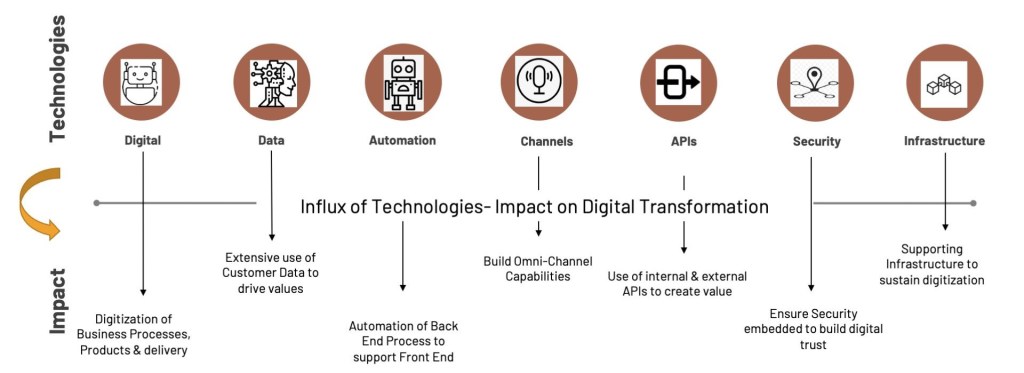
As we’ve explored the fundamental technologies that power innovative fintech services, it becomes clear why a thorough evaluation of these systems is crucial. This is where Tech Due Diligence (TDD) steps in.
TDD provides key insights on:
Security: Is the fintech’s technology infrastructure robust enough to ward off cyberattacks and protect sensitive financial data?
- Scalability: Can the technology handle significant growth in user base and transaction volume?
- Compliance: Does the technology adhere to all relevant regulatory requirements?
- Integration: Can the technology seamlessly integrate with existing financial systems and platforms?
By conducting a thorough TDD, investors can make informed decisions about where to allocate their capital. They gain confidence in the long-term viability of a fintech venture, ensuring their investment supports sustainable growth and innovation. Overall, TDD plays a multifaceted role in the growth of India’s fintech space. For established financial institutions, TDD acts as a self-assessment tool, identifying areas for technology modernization and ensuring their systems are secure, compliant, and scalable. For fintech startups, TDD empowers them to showcase the robustness of their technology to potential investors, thereby attracting critical funding for growth.
Taking a Deep Dive: The Tech Due Diligence Process

Our scrutiny is rigorous and multifaceted when conducting TDD in the fintech space. Here’s what we focus on:
- Platform Capabilities: We assess the services offered, meticulously examining the customer journey, product configurations, data storage practices, and management capabilities. Our focus goes beyond functionalities – we analyze how features translate into user experience by evaluating the interface, design, and even incorporating user feedback.
- Technology Architecture: This is where the technical examination deepens. We scrutinize the deployment processes, integration robustness with external systems, and most importantly, the platform’s ability to scale. Reliability is paramount, so we meticulously assess performance, fault tolerance, and overall resilience.
- Integration: We delve into the ecosystem of available APIs, focusing not only on their existence but also on their documentation for seamless third-party use. Additionally, we investigate past integration challenges and analyze the API gateway architecture to ensure smooth interconnectivity.
- Cybersecurity: Security is non-negotiable. We thoroughly review IT and information security policies, scrutinize data security controls, and analyze the platform’s overall security assessment. Data encryption methods are also examined for their effectiveness in protecting sensitive information.
- Regulatory Compliance: Regulatory compliance is vital. We navigate through all applicable regulations, including Digital Lending Guidelines (DLG) and LSP regulations. This also involves intellectual property reviews of both paid and open-source software, alongside a “sanity check” of the source code to prevent any infringement.
By following these steps, TDD provides a comprehensive roadmap for assessing the health and potential of a company’s technology foundation.
Conclusion
The Indian financial landscape has undergone a significant transformation in recent years, driven by the adoption of modern technology in the fintech sector. Fintechs have played a crucial role in promoting financial inclusion and creating innovative financial models. However, with rapid innovation comes the need for robust evaluation processes.
This is where Technology Due Diligence (TDD) emerges as a critical tool. TDD allows organizations, both established financial institutions and aspiring fintech startups, to conduct a comprehensive assessment of their technological infrastructure. For investors, TDD provides invaluable insights when considering potential fintech investments.
With a multifaceted role in the growth of India’s fintech space the TDD not only acts as a self-assessment tool for fintech startups but also showcases the robustness of their technology to potential investors.
RELATED POSTS

India’s Next Leap in Financial Inclusion: NSFI 2025–30
India’s new NSFI 2025–30 shifts financial inclusion from access to real-life outcomes, focusing on usage,...
Read More
From Policy Push to Product Pull: Why MSME Lending Needs Design Thinking
MSME lending is stuck in policy-driven credit. Learn why India now needs design-led, cash-flow-based products...
Read More